The Real Benefits of Digital Detox for Your Mind and Body
The benefits of a digital detox are tangible and transformative, ranging from sharper mental focus and reduced anxiety to improved sleep and more meaningful human connections. When you intentionally step back from your screens, you’re providing your brain a crucial opportunity to reset, recalibrate, and recover from the constant digital stimulation that defines modern life. This guide offers a complete breakdown of these benefits, the key differences you’ll experience, and actionable insights to help you reclaim your well-being.
Why a Digital Detox Is More Than Just a Trend
Our devices are ubiquitous, rarely more than an arm’s length away. While this constant connectivity offers undeniable conveniences, it comes with a hidden cost. A digital detox isn’t about demonizing technology; it’s a strategic pause designed to restore your attention, reset your priorities, and redefine your relationship with your digital tools. Think of it as an essential tune-up for your mind and a powerful act of self-care.
The need for this reset is no longer a niche concern. Soaring screen time has propelled the digital detox from a fringe idea into a mainstream wellness practice, driven by a collective realization of the powerful hold our devices have on us.
The average person now spends nearly 7 hours a day on internet-connected screens, checking their phone approximately 58 times daily. It’s no surprise that 76% of Americans are considering a detox. This sentiment is even more pronounced among younger generations, with a staggering 84% of Gen Z feeling the need to unplug. You can explore more data on the rise of digital detoxes to understand the scale of this trend.
This infographic puts the daily screen habits driving this movement into sharp perspective.
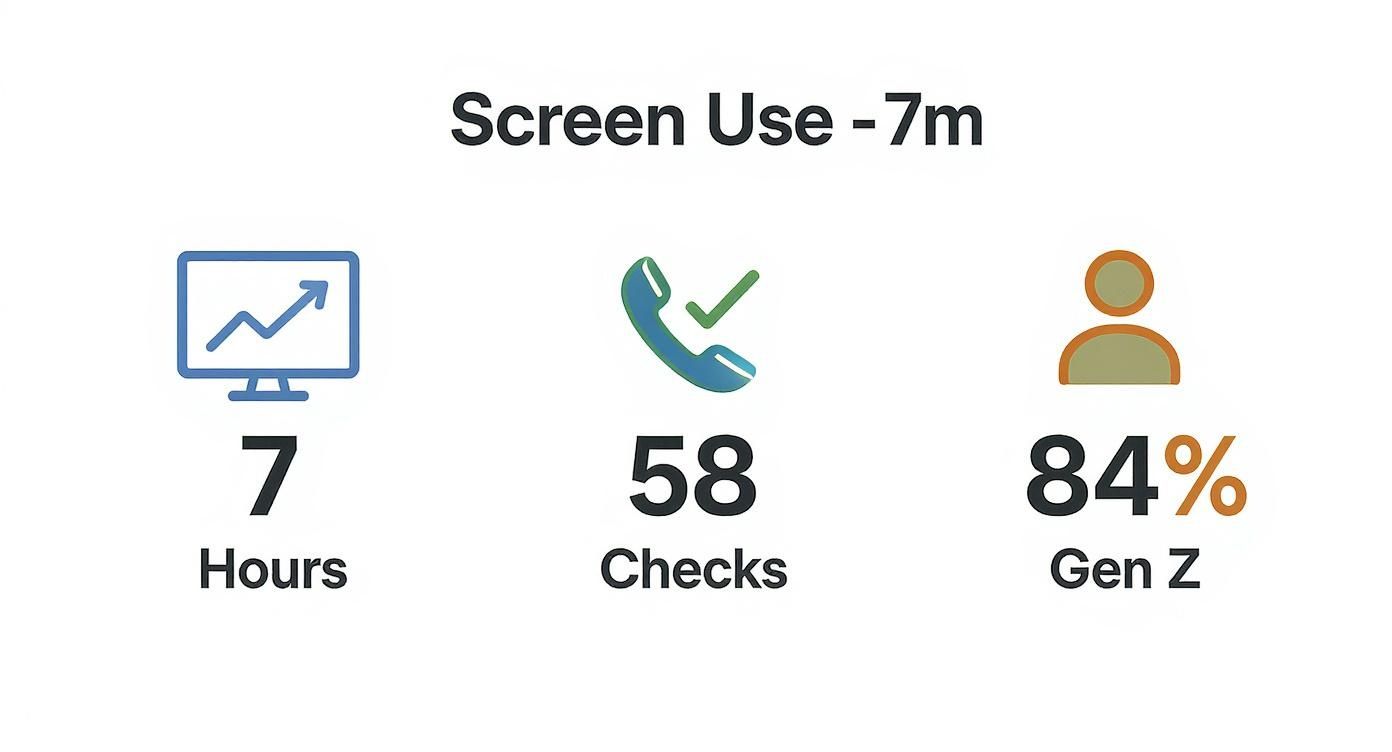
These statistics paint a clear picture: digital consumption is high, constant, and particularly intense for young adults, creating a clear implication for long-term mental and physical health.
The Real Impact of Constant Connectivity
This isn’t merely about time management. Being perpetually plugged in keeps our brains in a state of high alert, a low-grade “fight-or-flight” mode that makes deep focus and genuine rest feel impossible. It’s a quiet but significant drain on our cognitive and emotional resources.
A digital detox is a powerful antidote to this modern problem. It creates the mental space necessary for clarity, creativity, and genuine relaxation, proving it’s an essential tool for well-being, not just a passing fad.
Throughout this guide, we’ll break down the specific benefits, differences, and insights you need:
- Improved Mental Health: Uncover how unplugging actively reduces anxiety and dials down stress.
- Enhanced Productivity: Learn the actionable steps to reclaim focus and defeat digital distractions.
- Better Physical Well-being: Understand the direct link between reduced screen time and restorative sleep.
- Deeper Connections: Re-engage with yourself and others in a more present, meaningful way.
How Unplugging Calms Anxiety and Improves Mental Health

One of the most immediate and profound benefits of a digital detox is the significant improvement in mental health. The endless stream of notifications, the infinite scroll, and the pressure to be constantly available keep our nervous systems in a state of hyper-arousal, feeding a baseline of anxiety and stress. Stepping away provides the quiet necessary for your mind to reset and recharge.
Your social media feed functions like a digital slot machine. Every like, comment, and notification acts as a small “win,” delivering an unpredictable hit of dopamine—the brain’s reward chemical. This variable reward schedule is intensely compelling, encouraging you to keep pulling the lever (refreshing the feed), which creates a compulsive, anxiety-inducing loop.
A digital detox is your opportunity to break that cycle. By removing the constant stimulus, you allow your nervous system to downshift. The implication is physiological: reducing screen time can lower cortisol levels (the primary stress hormone), giving your mind the physical space it needs for genuine rest.
Escaping the Comparison Trap
Social media platforms are inherently curated highlight reels of others’ lives, making it dangerously easy to fall into the “comparison trap.” This constant exposure to idealized vacations, career wins, and perfect relationships can systematically erode self-esteem and foster feelings of inadequacy and anxiety.
Unplugging is a form of mental self-care. It allows you to shift your focus from the perceived lives of others back to your own, fostering gratitude and a more positive personal outlook.
This shift is crucial for mental well-being. Research consistently shows that reducing social media use leads to a significant drop in depressive symptoms. The World Health Organization has reported a troubling 13% annual rise in global mental health disorders, with depression affecting approximately 280 million people worldwide. The insight here is clear: studies confirm a direct link where a structured break from social media leads to a measurable decrease in depression severity, proving how deeply digital habits impact mental states. You can discover more insights about these mental health findings to see the data for yourself.
Creating Space for Mindfulness and Clarity
Beyond breaking negative cycles, a detox creates an opportunity for profound positive change: quiet reflection. True mindfulness is only possible when you aren’t being constantly pulled away by notifications or the urge to scroll. This newfound mental space allows you to process thoughts, connect with emotions, and simply be present. For a deeper dive, our guide on social media detox benefits explores this in more detail.
This practice of intentional disconnection doesn’t require an all-or-nothing approach. Small, targeted actions can have a significant impact. For instance, learning how to achieve mental clarity with Inbox Zero can dramatically reduce daily digital stress. By reclaiming these moments of quiet, you’re not just taking a break—you’re actively building resilience against the mental health challenges of our hyper-connected world.
Reclaim Your Focus and Boost Your Productivity

Do you feel like your focus is constantly fractured? You sit down to work on a critical task, but a notification buzzes. Even if you ignore it, a part of your brain is snagged, wondering what it was. This sabotages your ability to achieve true concentration.
This mental fog is caused by a phenomenon known as “attention residue.” Each time you switch tasks—even for a split-second glance at a notification—a piece of your attention is left behind on the previous task. As these micro-interruptions accumulate, the residue builds, making high-quality, thoughtful work nearly impossible.
A digital detox is the perfect solution. By intentionally disconnecting, you eliminate the constant pings that fragment your attention. This allows your brain’s prefrontal cortex—the hub for complex thought and decision-making—to recover and reset.
From Scattered Brain to Deep Work
This break from digital noise creates the ideal conditions for “deep work”—the ability to focus without distraction on a cognitively demanding task. This is the state where you solve complex problems, generate innovative ideas, and produce your most valuable output. Constant connectivity makes this state nearly impossible to achieve.
One of the key benefits of a digital detox is reclaiming this capacity for sustained concentration. The insight is that you’re not losing time by unplugging; you are making a strategic investment in the quality and efficiency of your work. For practical strategies, our guide on how to keep your focus on work offers actionable steps.
The goal of a detox isn’t just to stop being distracted. It’s to retrain your brain to value and sustain deep focus, making you more effective and innovative in everything you do.
The difference between a brain on digital overload and one enjoying a detox is stark. One operates in a constant state of reactive firefighting, while the other engages in proactive, meaningful work. To build this focus muscle, check out these 5 Ways To Successfully Ditch The Digital Distractions and start minimizing interruptions for good.
Comparison: Your Brain on Digital Overload vs. Digital Detox
To truly understand the implications, let’s compare the two states. This table breaks down the profound difference between a constantly interrupted mind and the focused mindset achievable with a digital detox.
| Cognitive State | With Digital Overload | During a Digital Detox |
|---|---|---|
| Attention Span | Short and fragmented | Long and sustained |
| Problem-Solving | Superficial and reactive | Deep and analytical |
| Creative Thinking | Stifled and limited | Enhanced and expansive |
| Mental Energy | Drained and fatigued | Restored and resilient |
The shift is not minor—it’s a complete overhaul of your cognitive capabilities. A detox doesn’t just clear your head; it fundamentally changes how you think and work.
The Surprising Physical Benefits of Less Screen Time

While we often frame digital detoxes around mental clarity, the benefits extend deeply into your physical health. From sleep quality to neck strain, stepping away from screens is a direct investment in your bodily well-being.
The implication of constant connectivity is often a more sedentary lifestyle, glued to a chair or slouched over a phone. A digital detox naturally encourages movement and engagement with the physical world, leading to immediate health improvements.
Better Sleep Through Less Blue Light
Have you ever scrolled in bed, only to find yourself more awake an hour later? This isn’t a coincidence. Screens emit a powerful blue light that tricks your brain into thinking it’s still daytime, disrupting your body’s natural sleep-wake cycle (circadian rhythm).
This blue light actively suppresses the production of melatonin, the hormone that signals your body it’s time to sleep. The result is difficulty falling asleep, restless nights, and waking up feeling groggy, even after a full night’s rest.
One of the most powerful benefits of a digital detox is reclaiming your natural sleep rhythm. An actionable insight: put your phone away at least an hour before bed. This sends a clear signal to your brain to begin melatonin production, paving the way for deeper, more restorative rest.
This is about more than just feeling tired. Chronic poor sleep is linked to numerous health issues, making a screen-free evening routine one of the simplest and most effective actions for your overall health.
Easing Physical Strain and Discomfort
Our devices are also a direct cause of physical aches. The typical posture for texting or scrolling—head tilted forward, shoulders rounded—puts immense strain on the neck and spine, a condition now widely known as “tech neck.”
Over time, this posture can lead to chronic pain, tension headaches, and long-term spinal issues. Simultaneously, prolonged screen time causes digital eye strain, resulting in dry eyes, blurred vision, and headaches.
Here is a breakdown of actionable solutions:
- The 20-20-20 Rule: Every 20 minutes, look at something 20 feet away for at least 20 seconds. This simple exercise gives your eye muscles a necessary break.
- Mindful Posture: Make a conscious effort to bring your phone to eye level rather than craning your neck down.
- Movement Breaks: Set a timer to stand, stretch, and walk around at least once an hour. Your body will thank you.
By consciously disconnecting, you naturally reduce time spent in these physically stressful positions. The physical benefits are clear: you’ll sleep better, move more, and feel less daily pain, proving that logging off is powerful self-care for your body as well as your mind.
Rediscover Deeper Connections—With Yourself and Others
One of the most powerful transformations during a digital detox is the shift in your most important connections—both with others and, crucially, with yourself. Our digital lives are often characterized by shallow interactions: likes, brief comments, and fleeting messages that lack the depth of genuine, face-to-face communication.
When you put your phone down and truly engage, you’re not just hearing words. You are picking up on body language, sensing energy, and sharing a moment of undivided attention. This level of presence forges strong, meaningful relationships, turning flimsy online connections into real-world bonds.
Strengthening Your Most Important Relationship
While connecting with others is vital, the most critical reconnection often happens internally. A digital detox carves out precious, uninterrupted time for you to reacquaint yourself with you. Without the constant pull of notifications and the endless scroll, you create space to revisit old hobbies, explore new interests, or just sit with your own thoughts.
This quiet space allows you to hear your inner voice without the deafening noise of the outside world. It’s an opportunity to check in with your own feelings, goals, and desires—to reinforce a sense of self that can easily be lost in the digital shuffle.
A key insight from a digital detox is the reframing of boredom. Instead of a void to be filled with scrolling, it becomes fertile ground where creativity, self-reflection, and new ideas are born.
Embracing these quiet moments isn’t just about relaxation; it’s an active process of self-discovery and personal growth. It’s your chance to rebuild and strengthen the connection that matters most.
This process also breaks cycles of dependency. A 2023 study on digital detoxes found that participants who restricted device use felt a significant decrease in dependency, with positive effects lasting for weeks. Many found it less difficult than anticipated, reporting relief and pleasure from breaking compulsive habits. You can read the full research on these behavioral changes to dig deeper. This shows a powerful insight: unplugging fosters greater self-awareness and helps build healthier, more intentional habits for the long term.
Your Questions About Digital Detox Answered
Even with the benefits clearly laid out, taking the first step can feel daunting. This hesitation is normal, especially when our devices are so deeply integrated into our daily lives. Let’s break down some common questions with actionable insights to help you get started.
This isn’t about a drastic, all-or-nothing shutdown. It’s about making small, intentional choices that create a healthier relationship with technology.
What If I Get Serious FOMO (Fear of Missing Out)?
The fear of missing out is a powerful driver of screen attachment. We worry we’ll miss a critical email, a viral trend, or a social invitation. A digital detox helps reframe this anxiety.
Instead of obsessing over what you might be missing online, you start appreciating what you’re gaining in the real world. This is the shift to the Joy of Missing Out (JOMO)—the relief that comes from being present in your own life, free from the pressure to keep up with everyone else’s highlight reel. You will quickly discover that most “urgent” notifications weren’t urgent at all.
A key insight from a detox is that the world doesn’t stop if you’re not watching it online. This empowers you to choose where to place your attention, moving from a reactive state of FOMO to a proactive state of JOMO.
I Feel Overwhelmed, Where Do I Even Begin?
The idea of a full-scale detox can be paralyzing. The secret is to start small and build momentum. You don’t need to go off-grid for a week to experience the benefits.
Think of it like starting a new fitness routine: you begin with a short walk, not a marathon.
Here is a breakdown of manageable first steps:
- The Screen-Free Evening: Designate one night a week where all screens go dark after dinner.
- The Notification Purge: Go into your phone’s settings and turn off all non-essential notifications. The immediate mental quiet is profound.
- The Single-Tasking Challenge: When you need to focus, physically move your phone to another room to eliminate the temptation for a “quick check.”
These mini-experiments make the process feel achievable. For a more detailed, step-by-step plan, check out our complete guide on how to do a digital detox.
How Do I Know If My Detox Is a Success?
Success isn’t measured by hours offline. It’s defined by a tangible shift in your mindset and daily habits. You’ll know your digital detox is working when you observe meaningful, positive changes. The ultimate win is reclaiming control.
This comparison table breaks down the difference between the “before” and “after” states:
| Metric of Success | From Overload (Before Detox) | To Balance (After Detox) |
|---|---|---|
| Mindset | Anxious when your phone isn’t right there. | A sense of freedom without your phone. |
| Focus | Constantly pulled away by notifications. | Able to concentrate on a single task for longer. |
| Sleep | Mindlessly scrolling in bed, leading to restless nights. | Winding down without a screen, sleeping more deeply. |
| Connections | Prioritizing online interactions over face-to-face ones. | Being more present and engaged with friends and family. |
A successful digital detox isn’t a one-time finish line. It’s an ongoing practice of using technology intentionally, where you decide how it serves you—not the other way around. It’s about building a sustainable, balanced digital life that genuinely supports your well-being.
Ready to create your own path to digital balance? The Digital Detox App Hub offers simple, focused tools to help you unplug, recharge, and build healthier tech habits, one small step at a time. Start your journey today.