How to Do a Digital Detox Without Losing Your Mind
In this article, you will learn how to do a digital detox. It’s pretty simple: it’s a conscious, voluntary break from your phone, tablet, and computer for a set amount of time. Think of it as hitting the reset button to clear your head, dial down the anxiety, and get your focus back by stepping away from the non-stop digital noise.
Why a Digital Detox Is a Non-Negotiable Act of Self-Care
Let’s be real—the constant buzz of notifications, the mindless scrolling, and the pressure to always be online is just plain exhausting. The average person spends over six hours a day glued to a screen. That’s more than a time sink; it’s a massive drain on our mental and physical batteries. This digital static slowly chips away at our ability to concentrate, fuels anxiety, and completely erases the line between work and life.
The psychological pull is no joke. Every “like,” comment, or notification gives our brain a tiny hit of dopamine, creating a powerful feedback loop that keeps us hooked. It’s a process that messes with our natural reward system, making it incredibly hard to stop and contributing to what many now call “phone fatigue”—a state of mental burnout from being overstimulated by our devices.

The True Cost of Constant Connectivity: A Breakdown of Benefits
Being “always on” has some serious hidden costs, impacting our well-being in ways we don’t always notice until we step back. Recognizing these effects is the first step to understanding the profound benefits a detox can offer.
| Negative Impact of Constant Connectivity | The Positive Benefit of a Digital Detox |
|---|---|
| Diminished Focus: Constantly jumping between apps and notifications trains our brains for distraction, making deep work feel impossible. | Improved Concentration: Unplugging allows your brain to reset, strengthening your ability to focus deeply on a single task for longer periods. |
| Poor Sleep Quality: The blue light from screens suppresses melatonin, the hormone that signals sleep, leading to restless nights and insomnia. | Restorative Sleep: By avoiding screens before bed, you allow your natural sleep cycle to function properly, leading to deeper, more refreshing sleep. |
| Increased Anxiety and Stress: Social media’s highlight reel fuels comparison and the pressure to be instantly available, creating persistent, low-grade stress. | Reduced Anxiety & Increased Presence: Stepping away from the digital world reduces social comparison and allows you to be more present and engaged in your immediate surroundings, fostering genuine connection. |
| Eroded Work-Life Boundaries: The ability to check work email from anywhere, at any time, blurs the line between professional and personal life, leading to burnout. | Reclaimed Personal Time: A detox helps re-establish firm boundaries, giving you back precious time for hobbies, relationships, and rest. |
A digital detox isn’t about ditching technology forever. It’s about intentionally creating space to reclaim your attention, find some mental clarity, and build a healthier, more mindful relationship with your devices.
How to Do a Digital Detox : From Trend to Essential Practice
A few years ago, “unplugging” might have sounded like a trendy wellness buzzword. Today, it’s an essential act of self-care.
If you’re on the fence, learning about the 7 signs you need a digital detox can offer some real clarity. This isn’t about restriction; it’s about liberation. It’s about giving yourself permission to recharge without feeling guilty about it.
Preparing for a Successful Digital Detox
Jumping into a digital detox cold turkey is a recipe for stress, not success. A truly restorative break isn’t just about switching off your phone; it’s about setting the stage mentally and environmentally for a period of intentional disconnection. Think of this as your pre-flight checklist to make sure your journey offline is smooth and genuinely refreshing.
The very first thing to nail down is your personal “why.” What’s driving this? Are you desperate for deeper focus to finish a creative project? Do you crave more present, meaningful conversations with your family? Or are you simply trying to reclaim a few hours of sleep lost to the endless scroll? Your motivation is the anchor that will hold you steady when the urge to check notifications hits.
Define Your Detox Goals
Once you know your ‘why,’ you can set goals that are both clear and realistic. Not every detox has to be a week-long, off-grid adventure in a cabin. In fact, small, targeted changes often have the biggest impact.
Here are a few ways to frame it:
- The Light Reset: Start with a simple but powerful rule, like “no phones in the bedroom.” This one boundary can dramatically improve your sleep quality by cutting out blue light exposure right before bed.
- The Weekend Recharge: Commit to a full 48 hours completely unplugged. This gives your brain enough time to truly disengage and remember what it feels like to be bored—which is often where creativity sparks.
- The App-Specific Cleanse: If one app is the main villain (hello, TikTok), try deleting just that one app for a week. You might be shocked by how much mental space it frees up.
Don’t underestimate the power of this prep phase. Research shows it’s absolutely crucial. One recent study found that while one in five consumers has tried a full digital detox, a staggering 80% of those who unplugged reported feeling liberated. Even two-thirds of people who took smaller moderation steps felt satisfied. You can read more about these digital detox trends to see just how effective a planned approach can be.
Prepare Your Offline Life
A little bit of logistical planning goes a long way in preventing detox-related anxiety. Take a few minutes to think about what you truly rely on your devices for and line up some offline alternatives ahead of time.
Don’t let your detox get derailed by a simple lack of planning. A few small steps can be the difference between a frustrating weekend and a genuinely restorative one.
Here’s a quick rundown of essentials to handle before you switch off:
- Communicate Your Plans: Give your friends, family, and maybe even your boss a heads-up. A simple “I’m taking a digital detox this weekend and will get back to you on Monday” manages expectations and keeps people from thinking you’ve fallen off the face of the earth.
- Download What You Need: If you’re heading somewhere new, save offline maps. Download a few playlists or podcasts. And for goodness sake, jot down any important phone numbers on a piece of paper.
- Plan Your Time (Loosely): Don’t leave a giant, screen-shaped void in your weekend. Schedule a coffee date, pull that dusty board game out of the closet, or plan a hike. Having engaging, screen-free activities ready to go makes the transition feel seamless and, dare I say, fun.
To make this even easier, we’ve put together a checklist to walk you through the final preparations.
Your Digital Detox Planning Checklist
Going through a quick checklist before you start can ensure you’ve covered all your bases. It helps you anticipate potential roadblocks and smooth them out ahead of time, letting you focus on disconnecting rather than scrambling to solve logistical problems.
| Preparation Step | Action Item | Why It’s Important |
|---|---|---|
| Set Your “Why” | Write down 1-3 specific reasons you’re doing this detox. | This is your core motivation. When you feel the urge to scroll, rereading this will remind you why you started. |
| Define Clear Rules | Decide exactly what you’re avoiding (e.g., all screens, social media apps) and for how long (e.g., 48 hours). | Ambiguity is the enemy of willpower. Clear rules eliminate in-the-moment decision-making and reduce stress. |
| Inform Your Circle | Send a brief text or email to key contacts letting them know you’ll be offline. | This manages others’ expectations, prevents unnecessary worry, and reduces your own anxiety about being unreachable. |
| Prep Offline Tools | Download maps, playlists, and recipes. Write down important phone numbers. | Prevents a minor inconvenience (like getting lost) from forcing you to break your detox and turn your phone back on. |
| Plan Activities | Schedule at least one engaging, screen-free activity for each day of your detox. | Having a plan prevents boredom, which is one of the biggest triggers for reaching for a device. |
| Create a Tech-Free Zone | Designate a physical space (a drawer, a box) where you will store your devices and leave them untouched. | “Out of sight, out of mind” really works. Removing the visual cue of your phone dramatically reduces habitual checking. |
Once you’ve checked these boxes, you’re not just hoping for a good detox—you’ve actively engineered one. You’re ready to disconnect with confidence and truly enjoy the benefits.
Crafting Your Personalized Detox Plan
There’s no one-size-fits-all blueprint for a digital detox. The right approach for you hinges entirely on your lifestyle, your goals, and just how deeply tangled you feel in your digital life. The real trick is to stop thinking of it as a period of deprivation and start seeing it as an opportunity for genuine enrichment and rediscovery.
This simple flow chart really nails the foundational steps for any detox: figure out your goal, tell people what you’re doing, and get your space ready.
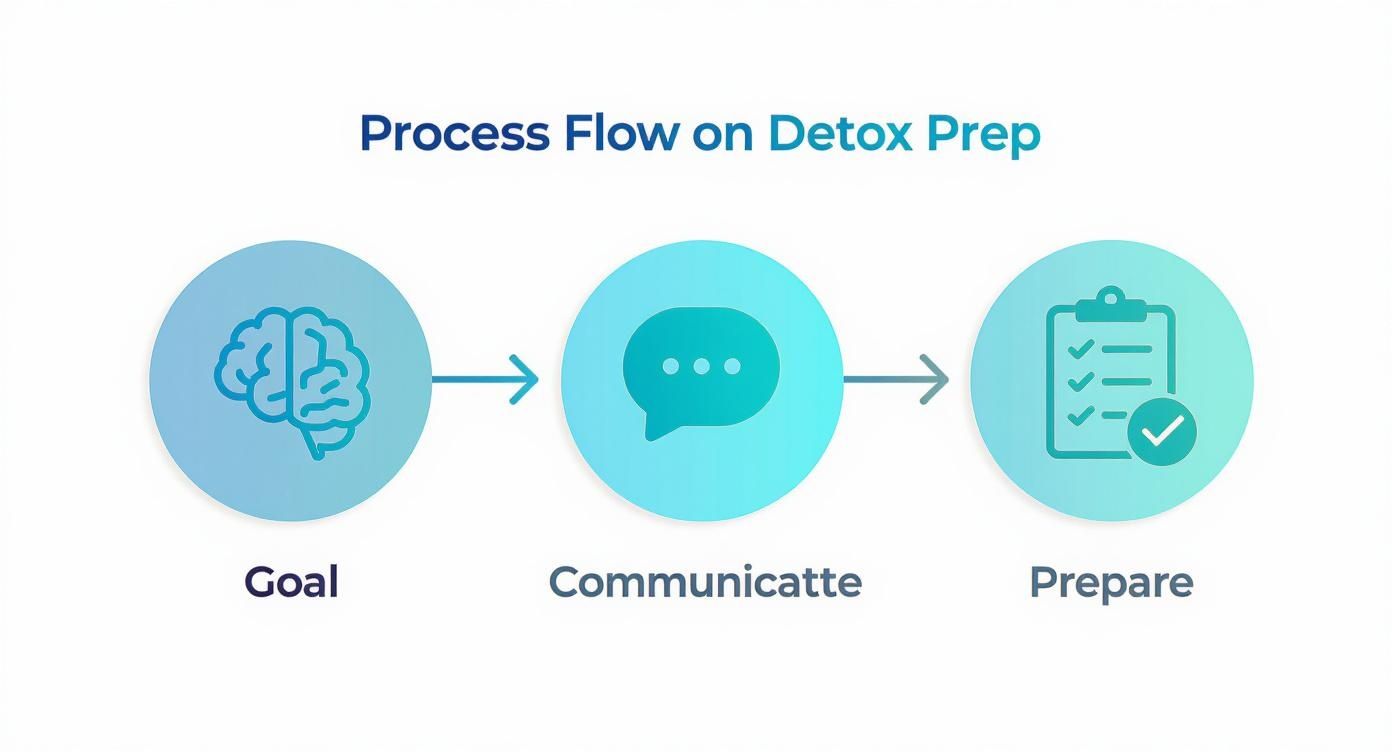
What this shows is that a successful detox starts long before you ever turn off your phone. It kicks off with clear intention and a bit of thoughtful prep. So, let’s dig into what that actually looks like with three distinct, real-world frameworks.
The Light Reset: A 24-Hour Break
Think of the Light Reset as a quick, refreshing dip in the offline world. It’s not about a total, dramatic disconnect. Instead, you’re just targeting a specific digital pain point for a solid 24 hours. This is the perfect place to start if you’re feeling fried but aren’t quite ready to ditch your phone for a whole weekend.
The goal here is targeted relief. Maybe you’re just sick of the endless comparison game on social media, or the 24/7 news cycle has you on edge. A Light Reset lets you silence just that one source of digital noise.
Here’s how to pull it off:
- Pick Your Poison: Choose one specific category to ditch. It could be all social media apps, news websites, or those mindless mobile games.
- Set Your Clock: Pick a 24-hour window where you can realistically stick to it, like from Saturday morning to Sunday morning.
- Plan One Alternative: This is non-negotiable. Instead of scrolling, you could finally crack open that book on your nightstand, go for a long walk, or tackle that small home project you’ve been putting off.
The Weekend Recharge: A 48-Hour Disconnect
The Weekend Recharge is a much more immersive experience, designed for a deeper mental reset. This means stepping away from all non-essential screens for a full 48 hours. It gives your brain a real chance to slow down, break the dopamine loop of notifications, and get back into the rhythm of a life with fewer interruptions.
The main win here is breaking the habit cycle. When you go a full weekend without instinctively reaching for your phone, you become painfully aware of those ingrained impulses. That awareness gives you the power to consciously choose to do something else.
This kind of detox is less about what you’re giving up and more about what you’re reclaiming: uninterrupted time for hobbies, deeper conversations, and the simple pleasure of just being present.
For this approach, you’ll want to put away all personal devices—smartphones, tablets, personal laptops, you name it. The focus is on screen-free activities that engage your senses and connect you with the world right in front of you.
- Dust off a Hobby: Spend an afternoon painting, playing an instrument, or getting your hands dirty in the garden.
- Get Outside: Plan a hike, have a picnic in the park, or just find a quiet spot outside and listen to the world for a bit.
- Connect Face-to-Face: Host a board game night or have a long, unhurried dinner with family or friends where no one is checking their phone.
The Deep Immersion: A Week-Long Journey
A Deep Immersion is a serious commitment—we’re talking a full week away from the digital world. This is for those of us who feel truly burned out and need to fundamentally recalibrate our relationship with technology. It’s an opportunity to gain some profound insights into your habits and mental state.
This isn’t just about avoiding screens; it’s about creating an environment where your digital life is completely off-limits. People often do this while on vacation or during a planned staycation. If this sounds like what you need, exploring a structured program like the 7-day digital detox challenge can provide a super helpful framework and support system.
A Deep Immersion can lead to huge improvements in focus, creativity, and overall mental well-being. It offers a powerful shift in perspective that sticks with you long after you plug back in.
Navigating the Common Challenges of Unplugging
Deciding to unplug is one thing. Actually sticking with it when the initial buzz wears off? That’s where the real work begins.
It’s completely normal to feel a little lost at sea. You might get hit with a serious case of FOMO (fear of missing out), feel phantom vibrations in your pocket, or just have a surprisingly strong, nagging urge to check something.
If you’re feeling that discomfort, it’s actually a sign the detox is working. Your brain has been trained to chase the small dopamine hits that notifications and fresh content deliver. When you take that away, it leaves a void. The trick isn’t to fight this feeling, but to understand it and have a plan ready to deal with it.
Understanding and Overcoming Digital Withdrawal
The psychological pull of our devices is incredibly powerful, and breaking away from it can genuinely feel like navigating withdrawal. Knowing what to expect makes these hurdles feel a lot less intimidating when they show up.
And trust me, you’re not alone in this. A 2024 study revealed that 64% of people attempting a digital detox were focused on quitting social media. But here’s the kicker: 51% of them eventually fell back into old habits. It’s a stark reminder of just how deeply these platforms are woven into our daily lives. You can check out more digital detox statistics to see just how common these challenges really are.
To stand up to those urges, you need some practical coping strategies in your back pocket.
- Mindfulness and Deep Breathing: The second that impulse to scroll hits, just pause. Take five slow, deep breaths. This simple act creates a tiny bit of space between the urge and your reaction, giving you a moment to consciously choose a different path.
- Journaling Prompts: Grab a notebook and process what’s happening. Ask yourself: What am I feeling right now? What am I actually afraid of missing? Getting it down on paper often makes the anxiety feel smaller and reveals that the “urgent” need to check in isn’t so urgent after all.
- Physical Replacement Habits: Find something else for your hands to do. Pick up a guitar, a sketchbook, or even a stress ball. Redirecting that physical restlessness can be a surprisingly effective way to short-circuit the mental craving for your phone.
The goal isn’t a perfect, struggle-free detox. It’s about building resilience and learning to sit with that discomfort, knowing it will pass. Each time you successfully ride out an urge, you strengthen your ability to stay disconnected.
The Power of Intentional Check-Ins
Let’s be realistic. For many of us, going completely cold-turkey isn’t practical. Work, family, and other commitments often mean we can’t just vanish from the grid.
If that’s your situation, trying to fight the need to check in will only pile on more stress. A better approach? Build intentional, time-boxed check-ins right into your detox plan.
This gives you a sense of control without completely derailing your progress. Schedule one or two specific five-minute windows each day to look for genuinely urgent messages. By setting a timer and sticking to it, you can address your real-world needs without getting sucked back into the black hole of mindless scrolling, which helps you stay committed to your bigger goals.
Turning Your Detox into Lasting Digital Wellness Habits
The real test of a digital detox isn’t just getting through a few days offline. It’s what happens the moment you power everything back on. The whole point is to fundamentally reshape your relationship with technology, turning those short-term gains into habits that actually stick. This re-entry phase is where the clarity you fought for solidifies into real, sustainable wellness.
You’re not alone in seeking this balance. The digital detox movement is quickly becoming a major wellness trend across the globe. As more people grow concerned about addictive algorithms and digital burnout, the desire to disconnect is stronger than ever. It’s a shift big enough to influence industries far beyond tech, sparking trends like simplified ‘dumb homes’ and other changes you can see in recent analyses. You can dive deeper into these insights with 2025 wellness trends on lifeinpumps.com.

Mindful Reintroduction Strategies
Whatever you do, don’t just dive back into the digital deep end. Wade in slowly and with intention. Think of the insights you gained while unplugged as your new personal rulebook—don’t let your old habits tear up the pages in the first hour you’re back online.
- Audit Your Apps and Notifications: Before you turn everything back on, be ruthless. Do you really need breaking news alerts buzzing on your wrist 24/7? Kill all non-essential notifications, especially from social media and shopping apps. They can wait.
- Curate Your Feeds for Positivity: Unfollow any account that makes you feel anxious, inadequate, or just plain bad. Your digital space should feel supportive and inspiring, not like a source of constant stress.
- Schedule Your Screen Time: You schedule meetings, right? Start blocking out specific times for checking email or scrolling through your feeds. Use your device’s built-in app timers to hold yourself accountable.
Building Your Sustainable Digital Wellness Plan
A good plan isn’t about harsh, rigid restrictions. It’s about creating a new default state where you are in control of your technology, not the other way around. This takes a conscious, ongoing effort to weave mindful practices into your daily life.
True digital wellness isn’t achieved by a single detox. It’s built through small, consistent choices that prioritize your focus and peace of mind every single day.
For instance, instead of one grueling week-long detox a year, why not try implementing “Screen-Free Sundays”? Or maybe a simple rule like no phones at the dinner table. These mini-detoxes keep the benefits fresh and stop that digital creep from taking over your life again. Exploring different ways to reduce screen time can give you plenty of other practical ideas to build into your routine.
To truly foster a healthy relationship with your devices, it helps to look at broader strategies for overall screen time wellness that make mindful usage a natural part of your day-to-day.
Long-Term Maintenance and Adjustment
Life changes, and your digital wellness plan should be flexible enough to change with it. A strategy that works perfectly today might need a few tweaks in six months, especially if you start a new job or take on a big project.
It’s all about checking in with yourself regularly.
- Give Yourself a Monthly Self-Audit: Once a month, just ask yourself: How has my screen time felt lately? Am I slipping back into old, mindless patterns?
- Identify New Triggers: Has a new app or a demanding work project started to cause stress? Get ahead of it before it becomes a bigger problem.
- Celebrate the Wins: Don’t forget to acknowledge the progress you’ve made. Recognizing how much better you feel is a powerful motivator to keep going.
When you start treating your digital habits like any other part of your well-being, a one-time event transforms into a lasting lifestyle—one that protects your focus and your sanity.
Your Top Digital Detox Questions, Answered
Taking the leap into a digital detox usually sparks a few questions. Let’s be honest, the idea of unplugging can feel a little daunting. Getting some clear answers upfront can make all the difference, turning a potentially frustrating experience into a genuinely refreshing break. Here’s my take on the most common questions I hear.
How Long Should a Digital Detox Last?
There’s no magic number here. The right length for a detox is the one that aligns with your goals and, crucially, feels possible for you right now.
- A 24-hour break is a fantastic way to hit the reset button. It’s perfect for targeting a specific habit, like that mindless Saturday morning scroll through Instagram.
- A full weekend (48-72 hours) offers a much deeper recharge. This gives your brain enough time to really disengage from the constant dopamine drip of notifications and start to heal.
- A week or longer is for when you need a fundamental shift in your tech habits. This is a more immersive experience that can truly change your relationship with your devices.
My best advice? Start small. A successful one-day detox builds the confidence and motivation you need to try a longer one down the road.
What If My Job Requires Me To Be Online?
This is a big one. For most of us, completely disconnecting isn’t realistic, and that’s okay. A partial detox, where you set firm boundaries, can be just as powerful for beating digital burnout and getting your personal time back.
Instead of aiming for a total shutdown, focus on what you can control.
You don’t have to go completely off-grid to reap the rewards. A ‘low-tech’ evening or a ‘screen-free Sunday’ can restore a surprising amount of mental clarity and peace.
For example, you could enforce a strict “no work devices after 7 PM” rule. Another strategy I’ve found incredibly effective is deleting distracting apps—like social media or personal email—from my phone during the workweek. I only reinstall them for the weekend. This creates a clean, powerful separation between my professional and personal digital worlds.
Will I Get Bored Without My Devices?
Honestly? Yes, you probably will. And that’s a good thing!
Boredom has become a lost art. We’re so conditioned to fill every spare second with a scroll, a tap, or a click that we’ve forgotten how to just be. That quiet space you might call “boredom” is actually where creativity, self-reflection, and new ideas are born.
To make it easier, have a few screen-free activities planned before you start.
- Pull out that old guitar you haven’t touched in years.
- Go for a walk, leave the headphones at home, and just pay attention.
- Tackle a complicated recipe that demands your full focus.
Learning to embrace those quiet, “boring” moments is a huge part of a successful digital detox. It’s how you retrain your brain to find joy and satisfaction in the real world, not just on a screen.
Ready to create a personalized plan that works for you? The Digital Detox App Hub offers a suite of free tools designed to help you set boundaries, find offline alternatives, and build a healthier relationship with technology. Start your journey toward digital balance today at https://digitaldetoxapp.com.