Practical Phone Addiction Help to Reclaim Your Focus
Getting phone addiction help often begins with asking yourself one simple, honest question: Is my phone a tool I use, or a reflex I can’t control?
This first step isn’t about guilt. It’s about building awareness—seeing the exact moment your phone use shifts from intentional to compulsive. That awareness is the foundation for real, lasting change. The core benefit of this initial step is clarity; it transforms a vague sense of unease into a tangible problem you can actually solve.
Recognizing the Signs of Phone Compulsion
Moving from vague guilt about screen time to a clear-eyed view of your habits is the foundation for taking back control. It’s easy to feel bad about how much you use your phone, but it’s far more powerful to understand why you’re reaching for it in the first place. The implication is significant: without understanding the “why,” any attempt to change is just guesswork.
The signs are usually subtle, woven right into the fabric of our daily routines.
Think about the last time you were waiting in line, sitting in traffic, or had a quiet moment alone. Did your hand instinctively reach for your phone without a second thought? This is a classic trigger—using your device to fill any pocket of boredom or social awkwardness. It’s a learned behavior that effectively short-circuits our ability to just be present.
From Habit to Compulsion: Understanding the Difference
So, what’s the difference between a simple habit and a full-blown compulsion? The dynamic boils down to control and consequence. A habit is an efficient shortcut your brain creates (e.g., checking traffic before leaving home). A compulsion is a habit that has taken over, creating negative outcomes you can’t seem to stop.
Do you feel anxiety or restlessness when your phone is out of reach? This is a common symptom of what experts call “nomophobia”—the fear of being without your mobile phone. This isn’t just a minor inconvenience; it’s a key signal that a habit has become a dependency. To dig deeper into the emotional drivers, it’s worth exploring resources on understanding nomophobia and phone anxiety.
The impact goes far beyond just feeling anxious. This constant connection can shatter deep work, wreck your sleep, and create distance in your most important face-to-face relationships. You might be physically present, but your attention is fractured.
A landmark 2014 study revealed a strong link between high social media usage and increased feelings of depression and anxiety. The cycle is vicious: users endlessly compare themselves to curated online personas, which can erode self-esteem and, ironically, foster a profound sense of loneliness.
A Framework for Self-Assessment
Instead of just tracking total screen time—a number that lacks context—start noticing why you’re picking up your phone. A simple self-assessment can reveal your patterns in a surprisingly powerful way.
For just one day, pause every time you pick up your phone and ask yourself these three questions:
- What was the trigger? (Was it a notification? Boredom? Stress? A difficult task I wanted to put off?)
- How do I feel right now? (Am I anxious? Lonely? Curious? Just distracted?)
- What am I sacrificing for this moment? (Am I giving up a real conversation, focus on my work, or just a rare moment of quiet?)
This honest look isn’t about judgment. Think of it as collecting personal data to see exactly how your phone use is impacting your productivity, relationships, and mental clarity.
Quick Assessment Symptoms and First Steps
This table breaks down common symptoms, what they imply about your relationship with your phone, and a direct, actionable first step you can take.
| Symptom or Behavior | Implication: What It Means | Your First Actionable Step |
|---|---|---|
| “Phantom Vibrations” | Your brain has been trained to anticipate notifications, creating a state of hyper-vigilance and anxiety. | Disable notifications for your top 3 most distracting, non-essential apps. Reclaim your focus. |
| Mindless Morning Scrolling | You’re starting your day in a reactive state, letting algorithms dictate your mood and focus from the moment you wake up. | Charge your phone outside your bedroom tonight. Use a real alarm clock to take back control of your mornings. |
| Reaching for Your Phone in Social Lulls | You’re using your device as a social crutch, avoiding potential awkwardness or boredom and weakening your social “muscles.” | The next time you’re with someone, put your phone face down on the table or leave it in your pocket. |
| Anxiety When Battery is Low or No Wi-Fi | Your sense of safety and connection has become overly dependent on your device’s status. | Intentionally let your phone’s battery run low without charging it immediately. Notice the feeling and breathe through it. |
This process of observation is the crucial first step. If these behaviors feel familiar, it might be time for a reset. You can learn more about the specific 7 signs you need a digital detox and see how they apply to your life.
Recognizing these patterns isn’t the end goal—it’s the starting line for building a healthier relationship with your technology.
Designing a Realistic Digital Detox Plan
A week-long digital retreat sounds amazing, but for most, it’s unrealistic. Lasting change doesn’t come from dramatic gestures; it comes from a personal plan that fits your life. This is about creating guardrails, not punishments. The core benefit of a realistic plan is sustainability.
Forget the pressure to be perfect. The goal is a detox that feels achievable and empowering. That means starting small and picking just one or two specific areas where you want to reclaim your time. Success in these small experiments builds the momentum you need for long-term change.
Gaining control over your phone really boils down to three simple phases: getting aware of the problem, identifying the specifics, and then taking action.
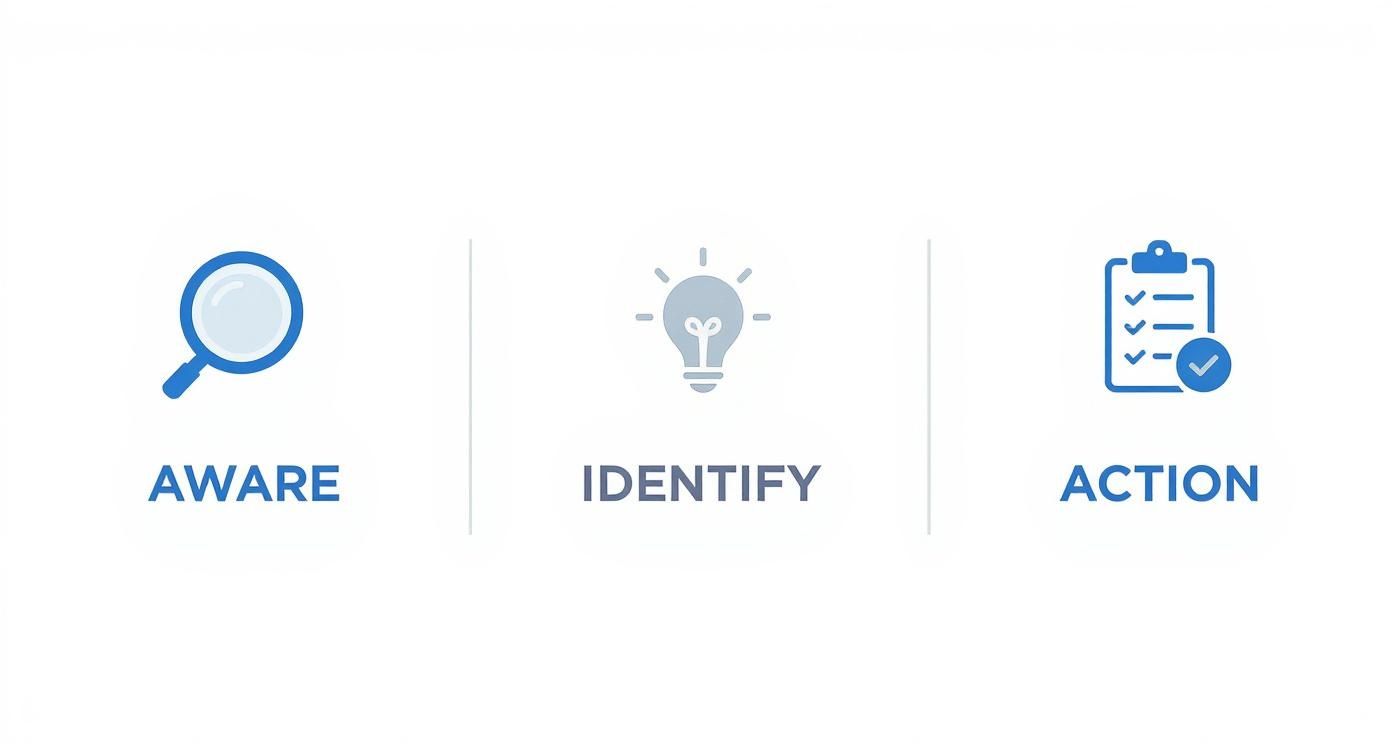
This process is a cycle. You start by becoming aware of your habits, pinpoint the biggest problem areas, and then take clear, measurable steps to address them.
Setting Achievable Goals
Instead of a sweeping declaration to slash your screen time in half, pick a smaller, more manageable target. The key is to choose goals that will make a noticeable difference without feeling like a huge sacrifice.
Here are a few practical ideas to get you started:
- Create a ‘No-Phone Zone’: Designate a physical space where phones are off-limits, like the dinner table or your entire bedroom. The benefit is reclaiming sacred spaces for connection and rest.
- Delete One Problem App: You know the one—the app that pulls you into the deepest scrolling vortex. Remove it from your phone for one week and see how you feel.
- Schedule ‘Screen-Free’ Time: Block out 30-60 minutes in your calendar each day for a completely screen-free activity. Take a walk, read a physical book, or just sit and think.
A successful detox isn’t about eliminating your phone entirely. It’s about making conscious choices that put you back in the driver’s seat of your own attention, one small boundary at a time.
Leverage Tools as Your Guardrails
Your phone actually comes with built-in tools designed to help you. Features like Focus Modes, Screen Time limits, and app blockers are your allies. Think of them as digital guardrails that gently steer you back on course when you start to drift into mindless scrolling. The insight here is to use the device against itself.
Structured programs are also incredibly effective. In fact, studies show digital detox plans have a 72% success rate in helping people reduce their smartphone dependency. The tools within these plans, like app blockers, have been shown to cut down on compulsive checking behaviors by as much as 61%.
Communicating Your New Boundaries
One of the trickiest parts of this process can be managing others’ expectations. If friends and family are used to instant replies, a sudden change can cause confusion. A little proactive communication goes a long way. The implication of not doing this is that social pressure can easily derail your efforts.
You don’t need a formal announcement. A simple script works best.
- For friends: “Hey, I’m trying to be on my phone less, so if I don’t reply right away, that’s why! I’ll get back to you when I can.”
- For family: “Let’s try to make dinnertime a phone-free zone so we can actually catch up without distractions.”
Setting these expectations upfront prevents misunderstandings and can even turn your social circle into a support system. For more ideas, you can also check out these other highly effective ways to reduce screen time.
Replacing Scrolling with Meaningful Activities
Putting your phone down can create an uncomfortable void. That emptiness is precisely what pulls most of us back into mindless scrolling. The most effective way to break free isn’t just about stopping a bad habit; it’s about consciously filling that newfound space with rewarding, real-world activities.
The goal is to replace cheap, fleeting dopamine hits from notifications with something more substantial. Over time, this process actually recalibrates your brain, teaching it that true satisfaction comes from genuine engagement, not constant distraction.

Reset Your Brain with Physical Movement
You don’t need an intense gym session. A simple ten-minute walk outside or a quick stretching session can work wonders. Physical activity is a powerful antidote to the sedentary nature of scrolling, providing an instant mood boost and mental clarity.
This isn’t just folk wisdom. Exercise rehabilitation is now recognized as a valuable complementary treatment for phone addiction. Therapeutic activities like art or music have also been shown to greatly enhance the effectiveness of recovery programs. For a deeper dive, you can read the full research on these therapeutic methods.
From Reactive Use to Intentional Connection
So much of compulsive phone use is reactive—we grab our phones in response to a buzz, a notification, or boredom. The alternative is intentional connection. Instead of being at your phone’s beck and call, you decide when and why you engage. The benefit of this shift is moving from being a passive recipient of digital noise to an active director of your own attention.
Try making these simple shifts to become more intentional:
- Schedule Check-in Times: Designate three specific times a day (e.g., 9 AM, 1 PM, and 7 PM) to check messages and social media. Outside of those windows, the phone stays out of sight.
- Communicate Proactively: Give friends and family a heads-up that you’re reducing your phone time so they don’t expect instant replies. This manages their expectations and reduces your own anxiety.
- One Task at a Time: When you do use your phone, have a single, clear purpose. Open the app, do the thing, and close it. This is especially critical if you want to understand how to stop social media addiction.
The most powerful shift you can make is viewing your phone as a tool you choose to use for specific tasks, rather than a constant companion that dictates your attention.
Rediscover Tangible, Offline Hobbies
Your brain craves stimulation, and scrolling provides an easy, low-effort source. To successfully replace it, you need to offer your mind something more engaging. This is the perfect opportunity to rediscover hobbies that use your hands and mind in a tangible way.
Think about activities you once enjoyed or have always wanted to try.
- Pick up a physical book instead of reading on a screen.
- Dust off that old guitar or keyboard.
- Try a creative outlet like sketching, painting, or journaling.
- Work on a puzzle or a model kit.
These activities demand your full focus, leaving little mental space for digital distractions. They provide a sense of accomplishment that scrolling can never match, building a foundation for a healthier life.
Building Sustainable Tech Boundaries
The goal isn’t to declare war on your phone. It’s about building a healthier relationship with it. Genuine, lasting phone addiction help comes from creating firm, sustainable boundaries that put you back in the driver’s seat. It all starts by reclaiming your personal space, both physically and digitally.
First, establish phone-free zones. Think of these as sacred spaces where technology isn’t invited. The two most powerful places to start are the dinner table, which protects mealtime for real connection, and the bedroom, which is crucial for restorative sleep. Swapping your phone for a classic alarm clock is a small change with a massive payoff for your sleep quality.

Executing a Digital Declutter
Beyond physical space, you need to declutter your digital environment. Your phone is engineered to grab your attention, but you can systematically dismantle its most distracting parts. This digital tidying up makes mindless scrolling a conscious choice instead of an unconscious reflex.
Here are high-impact actions you can take right now:
- Silence the Noise: Turn off every non-essential notification. Every buzz, ping, and banner shatters your focus. Be ruthless—if an alert isn’t from a real human or genuinely time-sensitive, it doesn’t deserve your immediate attention.
- Organize for Intentionality: Rearrange your home screen. Shove tempting social media and gaming apps off the first page and into a folder. This adds friction, forcing you to actively seek them out instead of opening them from muscle memory.
- Use Built-in Limits: Take advantage of the screen time tools already on your device. Set daily time limits for your most-used apps. When you hit that limit, the notification serves as a powerful nudge to go do something else.
If you need extra help, you might want to look into some of the 15 effective tools to minimize digital distractions that can offer more support.
Setting these boundaries isn’t just about what you don’t do; it’s about what you choose to do instead.
Effective Digital Boundary Strategies: A Comparative Breakdown
This table compares different strategies, offering insights into their specific benefits and implications.
| Boundary Strategy | How to Implement | Benefit & Key Insight |
|---|---|---|
| Phone-Free Zones | Designate areas (e.g., bedroom, dinner table) as tech-free. Use a traditional alarm clock. | Benefit: Improves sleep and in-person connection. Insight: Physically removing the phone is more effective than relying on willpower alone. |
| Notification Audit | Turn off all non-essential push notifications. Allow only alerts from key contacts or critical apps. | Benefit: Reduces distractions and anxiety. Insight: This single action shifts you from a reactive state to a proactive one, letting you choose when to engage. |
| Time-Based Boundaries | Set specific times for checking email/social media (e.g., “no phone before 9 AM,” “no work email after 6 PM”). | Benefit: Reclaims personal time and reduces mental fatigue. Insight: It compartmentalizes digital tasks, preventing them from bleeding into every part of your life. |
| App Friction | Move addictive apps off the home screen into folders. Use your phone’s built-in time limit features. | Benefit: Interrupts mindless, habitual app-opening. Insight: Even a two-second delay is often enough to break the compulsive loop and force a conscious choice. |
| Communicate Boundaries | Inform friends and family that you’re reducing phone use and may not reply instantly. | Benefit: Manages others’ expectations and reduces your anxiety. Insight: External support and accountability significantly increase your chances of success. |
Each of these strategies adds a small layer of intentionality, making it easier to use your phone on your own terms.
The core idea is simple: make intentional use easy and mindless scrolling difficult. Every small barrier you create between you and a distraction is a victory for your focus and well-being.
Finally, don’t forget to communicate these new boundaries. This part is just as important as setting them. A simple heads-up like, “Hey, I’m trying to be on my phone less, so I might not reply instantly,” helps manage expectations and can even turn them into allies.
How to Handle Setbacks and Track Your Progress
Breaking a habit as sticky as phone addiction is never a straight line. There will be days you scroll for an hour when you only meant to check one thing. That’s not just okay; it’s part of the process.
The most important insight is to reframe these moments as data, not failures. A slip-up doesn’t erase your progress; it just shines a bright light on a trigger. This is about progress, not perfection. Moving from self-criticism to curiosity is how you build the resilience to make this stick.
Tracking What Truly Matters
Forget about that one big, scary screen time number. Fixating on it is a recipe for feeling overwhelmed. Instead, focus on small, meaningful wins that prove you’re retaking control. This is where the real momentum comes from.
Here are metrics that are more powerful than a simple time count:
- Phone-Free Mornings: Did you make it through the first hour of your day without grabbing your phone? That’s a massive win that sets a deliberate tone for the day.
- Single-Tasking Success: Did you finish a work report or watch a movie without picking up your phone once? This is a clear sign your focus is strengthening.
- In-Person Presence: Did you get through a whole meal with friends with your phone tucked away? That’s how you strengthen the connections that actually matter.
Celebrate these moments. Each one is hard proof that you’re capable of changing this behavior.
When you slip up, just ask yourself one question: “What was the trigger?” Was it the stress of a work email? A sudden wave of boredom? Pinpointing the why turns a moment of weakness into your most powerful learning opportunity.
Turning Relapses into Your Roadmap
A relapse can feel like you’ve been knocked back to square one, but it’s really just your brain handing you a roadmap for what to do next. When you fall into an old pattern, pause and analyze what happened.
The goal isn’t to beat yourself up; it’s to build a proactive plan so you’re ready the next time that trigger appears.
Here’s a breakdown of that dynamic shift:
| Trigger Identified | Reactive Response (Old Way) | Proactive Plan (New Way) |
|---|---|---|
| Feeling bored while waiting in line. | Instantly pull out the phone and open a social media app. | Have a small book in your bag or practice a simple breathing exercise instead. |
| Anxiety after a stressful meeting. | Mindlessly scroll through news feeds to numb the feeling. | Take a five-minute walk to clear your head before returning to your desk. |
| Feeling lonely in the evening. | Default to texting or browsing dating apps for a quick connection. | Schedule a call with a friend or dedicate time to an offline hobby. |
This proactive approach is how you rewire your brain. Every time you successfully navigate a trigger without defaulting to your phone, you weaken that old, automatic neural pathway and build a new, healthier one.
Got Questions About Phone Addiction? We’ve Got Answers
When you start digging into your relationship with your phone, a lot of practical questions pop up. Getting straight answers can make the whole process feel less like a mountain to climb and more like a path you can actually walk.
How Long Does This Actually Take?
There’s no magic number here. For most people, you’re looking at a window of 30 to 90 days to disrupt an old compulsive habit and get a new one to stick.
But the key insight is this: it’s about consistency, not intensity. Forget about trying to be perfect overnight. That’s a recipe for burnout. The real win is making small, sustainable improvements day after day.
What If My Job Requires Me to Be Glued to My Phone?
This is a completely valid challenge. The solution isn’t to quit your job; it’s to create razor-sharp boundaries between your work life and your personal life, even when they both happen on the same device.
- Use Focus Modes: Your phone has powerful tools built right in. Set up a “Work Focus” mode that silences personal apps and notifications during your workday.
- Flip the Script After Hours: The second you clock out, do the opposite. Activate a “Personal” or “Downtime” mode that silences everything work-related.
- Communicate Your Availability: Be upfront with colleagues about your working hours. Putting it in your email signature or Slack status manages their expectations and reduces the pressure you put on yourself to be “always on.”
The implication of not creating this separation is professional burnout and the erosion of your personal time.
The real goal of getting a handle on your phone use isn’t just about cutting screen time—it’s about reclaiming control over what gets your attention and when. It’s about you being the boss of your phone, not the other way around.
Are All Those Screen Time Apps Actually Helpful?
Not all of them are created equal. The key difference is between apps that show you data versus apps that enable action. Many just throw a bunch of data at you, which can make you feel guilty but doesn’t actually help you change. The best apps don’t just show you the problem; they give you the tools to fix it.
A genuinely helpful app moves you from awareness to action. Look for features that let you:
- Set hard limits on the specific apps you struggle with.
- Schedule “downtime” when those distracting apps are completely blocked.
- See what triggers your high-usage moments, so you can spot your patterns.
You don’t even need to look far. The built-in tools like Apple’s Screen Time and Android’s Digital Wellbeing are surprisingly powerful and a fantastic place to start.
Should I Quit Cold Turkey or Just Cut Back?
For the overwhelming majority of people, gradual reduction is far more sustainable and effective. Here is a comparison of the two dynamics:
- Cold Turkey: This all-or-nothing approach sounds decisive but often backfires. The implication of failure is significant; it can lead to feelings of shame and make you less likely to try again. It’s like going from zero to a marathon overnight.
- Gradual Reduction: This is a much smarter approach. Pinpoint your single biggest time-waster and set a small, achievable limit for just that one thing. The benefit is that each small win builds confidence and momentum, making it easier to tackle bigger changes down the line.
The insight is that sustainable change is built on a foundation of small, repeated successes, not on one heroic, unsustainable effort.
Ready to build a healthier relationship with your phone? The Digital Detox App Hub offers a collection of simple, targeted tools to help you reclaim your focus and create lasting digital balance.