What Is a Digital Detox and How to Start One
Let’s start with the basics. A digital detox is simply a set period of time when you consciously decide to step away from your digital devices—think smartphones, laptops, tablets, you name it. It’s about voluntarily hitting the pause button on the constant stream of notifications, emails, and alerts to reconnect with the world offline.
The goal isn’t to ditch technology forever. That’s just not realistic. Instead, a digital detox is a strategic reset designed to recalibrate your relationship with your devices. The implication is a shift in dynamics where you are in control of your technology, not the other way around.
Unplugging in an Always-On World
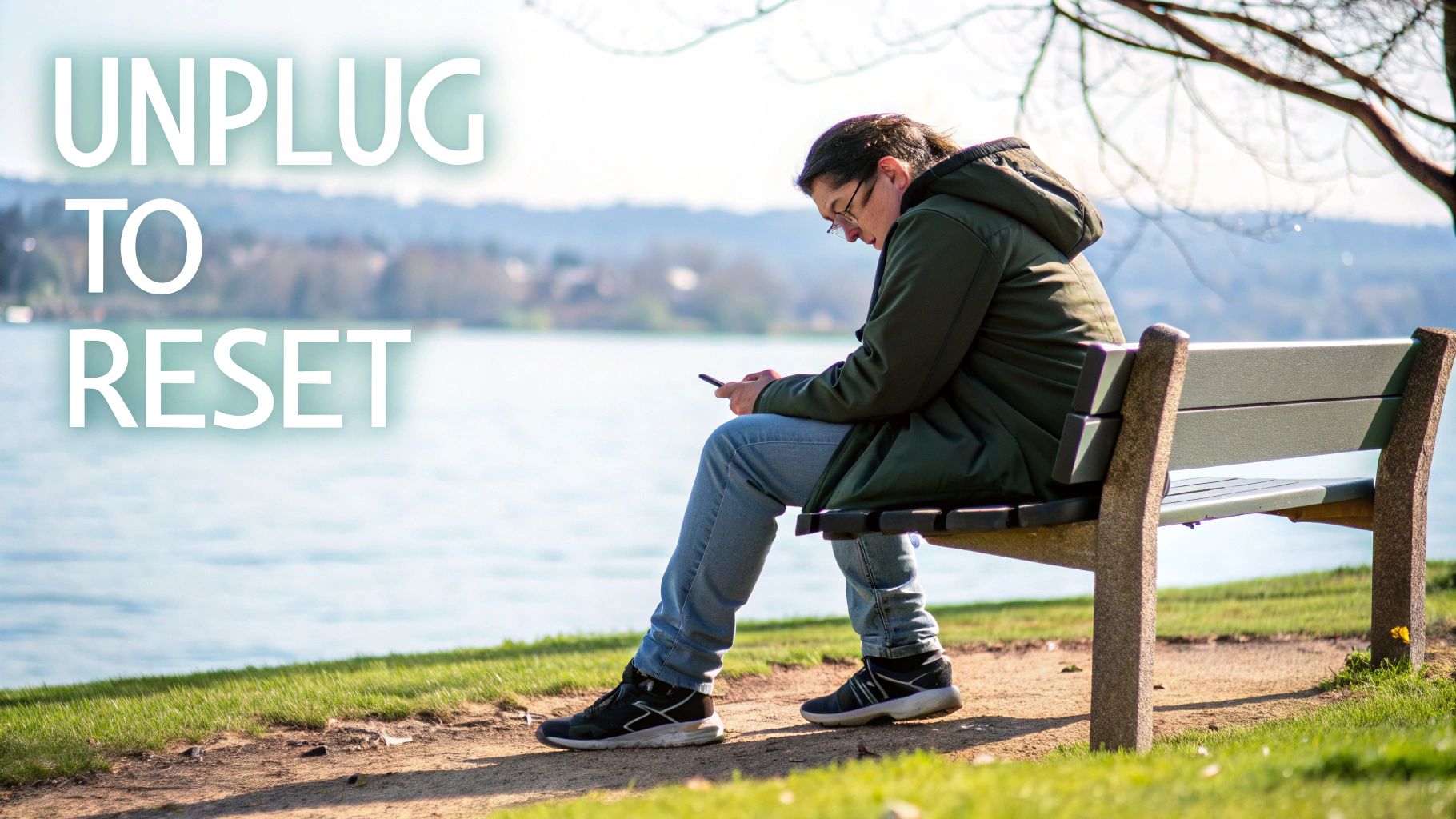
A digital detox is less of an extreme measure and more of a necessary mental refresh. Our brains, much like a computer’s operating system, get sluggish and cluttered when too many “apps” run simultaneously. The endless notifications, social feeds, and news alerts create a constant digital chatter that leads directly to mental fatigue and burnout.
The Dynamic Shift: Why Does This Matter Now?
The concept of a “digital detox” has exploded recently because the strain of being constantly plugged in is no longer a niche concern—it’s a mainstream reality. The data confirms this dynamic shift. Search interest in the term has more than tripled from 2023 to 2024, signaling a widespread public awakening to the implications of digital dependency on our well-being. You can dig into more of the numbers behind this trend on ElectroIQ.
Ultimately, taking a break provides the space to analyze your digital habits. It’s an opportunity to unlock tangible benefits:
- Slash Stress and Anxiety: Constant connectivity keeps our nervous systems on high alert. Unplugging allows your mind to exit this hyper-vigilant state and truly reset.
- Sharpen Your Focus: Without the endless barrage of pings, your brain can re-learn how to engage deeply with a single task, enhancing productivity and comprehension.
- Deepen Real-World Connections: A detox encourages you to be fully present with family, friends, and your environment, fostering stronger, more meaningful bonds.
- Kickstart Your Creativity: Boredom is a powerful catalyst for innovation. Giving your brain unstructured, quiet time allows it to wander, make novel connections, and spark new ideas.
A digital detox is an act of reclaiming your time and attention. It’s about creating intentional moments of disconnection to foster deeper connections with yourself and the world around you.
To give you a clearer picture, here’s a quick breakdown of the core concepts.
Digital Detox At a Glance: A Complete Breakdown
This table sums up the key ideas, differences, and implications behind taking a digital break.
| Concept | Description & Key Differences | Implications & Insights |
|---|---|---|
| Core Idea | A conscious, temporary break from digital devices to reduce stress and improve well-being. It differs from simply “reducing screen time” by being a full, intentional stop. | The insight is that a complete break, even if short, is more effective at resetting neural pathways than gradual reduction alone. |
| Primary Goal | To reset your relationship with technology, not to eliminate it. The goal is mindful usage versus mindless consumption. | The implication is that technology is a tool. A detox helps you regain control, making your devices serve your goals, not the other way around. |
| Main Benefit | Reclaiming your focus, reducing anxiety, and improving real-world connections. It’s about improving quality of life, not just productivity. | The key insight is that digital well-being directly impacts mental, physical, and social health. The benefits are holistic. |
| Key Action | Voluntarily unplugging from screens like phones, computers, and tablets for a set time. It’s a proactive choice, not a punishment. | This act of voluntary disconnection empowers you, proving that you can function—and thrive—without constant digital input. |
Taking a step back allows you to return to your digital life with more intention and control, ensuring your tools work for you, not the other way around.
Why Your Brain Is Craving a Break from Screens

If you’ve ever felt drained after a day heavy on screen time, you’re not imagining it. Our brains aren’t built for the relentless stimulation our devices provide. Every notification, like, comment, or new email triggers a tiny hit of dopamine, the brain’s “feel-good” chemical.
This creates what neuroscientists call dopamine loops. Think of your social media feed as a digital slot machine. You keep pulling the lever—scrolling—for that tiny, unpredictable reward. It’s an addictive system that keeps you hooked, even when the experience leaves you feeling empty or anxious. The implication is clear: this cycle is a primary reason why a digital detox feels so necessary for mental clarity.
The High Cost of Constant Connection
It goes beyond just dopamine. The sheer volume of information we’re expected to process is staggering. The average adult now spends over 10 hours a day glued to digital devices, with a significant number reporting they are online “almost constantly.”
This constant connection is directly linked to cognitive fatigue, shorter attention spans, and a spike in stress levels. Study after study connects excessive digital use to higher rates of anxiety and poor sleep. This “always-on” culture keeps our nervous systems stuck in a low-grade state of fight-or-flight. The implication is that our minds never get a chance to truly rest, a fast track to burnout.
Our brains evolved for periods of focus followed by rest, not for the relentless, fragmented attention that modern digital life demands. A digital detox is a biological necessity, not just a wellness trend.
The nonstop stimulation from our screens chips away at our well-being, making a real break absolutely critical. For anyone looking for restorative offline activities, exploring the art therapy benefits for mental health can be a powerful way to heal and reconnect with yourself.
How Screens Disrupt Your Natural Rhythms
The impact isn’t just mental; it’s deeply physical, especially when it comes to sleep. Our devices can completely throw our internal clocks out of whack. Here’s a breakdown of the implications:
- Blue Light Disruption: That blue light from your phone, tablet, and computer screen actively suppresses melatonin—the hormone that signals sleep. Scrolling before bed makes it harder to fall asleep and seriously damages the quality of your rest.
- Reduced Attention Spans: The fast-paced, ever-changing nature of online content trains our brains to constantly seek novelty. This makes it incredibly difficult to focus on a single, sustained task, like reading a book or even having a conversation without getting distracted.
- Social Comparison Overload: Social media feeds are often highly curated and unrealistic highlight reels. Constant exposure to these polished versions of reality can fuel deep feelings of inadequacy, anxiety, and the sense that you’re falling behind.
Ultimately, taking a break is about giving your brain the quiet space it desperately needs to repair, refocus, and reset its own natural, healthy rhythms.
Clear Signs You Need to Unplug and Recharge
That nagging feeling that something is just… off? It often starts there. The signs you need a break from your devices aren’t always big, dramatic moments. More often, they’re subtle nudges from your mind and body, quiet warnings that you’re hitting your digital limit. Learning to spot these signals is the first real step toward getting back in the driver’s seat.
The symptoms of too much screen time usually show up in three key areas: how you feel, how your body is reacting, and how you’re acting. When you start seeing your own habits in these patterns, it becomes clear that a break isn’t just a nice idea—it’s essential.
Emotional and Mental Red Flags
The mental and emotional strain is often the first thing people notice. Ever feel that jolt of panic when you can’t find your phone? There’s a name for that: nomophobia (no-mobile-phone phobia), and it’s a powerful sign of dependency.
Other emotional warning signs are just as telling:
- Irritability and Restlessness: You find yourself snapping easily, especially if someone interrupts you while you’re on a device or if you can’t get online when you want to.
- The Comparison Trap: You close Instagram or Facebook feeling worse about yourself than when you opened it—inadequate, envious, or like everyone else is surging ahead while you’re stuck.
- Brain Fog and Fractured Focus: Trying to read a book or hold a real conversation feels impossible without a constant, twitchy urge to check your phone for notifications.
If you feel more connected to your online followers than to the person sitting across the table from you, it’s a clear signal to unplug. A detox is all about flipping that script.
These feelings are your brain’s way of sending up a flare, telling you it’s overwhelmed and desperately needs a break from the relentless stream of digital noise.
Physical Symptoms of Digital Overload
The stress of being “always on” doesn’t just mess with your head; it takes a physical toll. One of the most common complaints is persistent eye strain, which can feel like your eyes are dry, tired, or just won’t focus properly after hours of staring at a screen.
You might also be dealing with:
- Junk Sleep: You toss and turn, struggle to fall asleep, wake up multiple times a night, or just feel groggy every morning. That late-night scrolling session is almost always the culprit.
- Frequent Headaches: You notice more tension headaches or even migraines cropping up, often a tag-team of eye strain and the poor posture that comes from hunching over your devices.
- Neck and Shoulder Pain: This is the infamous “tech neck.” It’s that nagging ache that comes from constantly craning your neck down to look at a phone or laptop.
These aches and pains aren’t random. They are direct feedback from your body that your digital habits are causing real, physical harm, making a detox a crucial step toward feeling better.
Finding the Right Digital Detox for Your Lifestyle
Jumping into a digital detox isn’t about flipping a switch and going completely off-grid overnight. That all-or-nothing approach rarely sticks. The most successful detox is one that actually fits into your real life. Just like you wouldn’t try to run a marathon without training first, you don’t need to disappear for a month to feel the benefits.
The whole point is to pick a strategy that matches what you’re trying to achieve. Are you hoping to quiet the anxiety from social media? Get a better night’s sleep? Or maybe just reclaim your ability to focus? Starting with a plan that feels doable sets you up for a win from the very beginning.
A Menu of Unplugging Options
Think of the different types of detoxes as tools in a kit, each one built for a specific job. Some are small and easy to manage daily, while others are more intense and designed for a much deeper reset. Let’s break down a few of the most popular and effective approaches.
The Digital Curfew: This is a fantastic place to start. It’s simple: you just set a hard stop time each evening—say, 9 PM—when all screens get turned off and put away until morning. This one is an absolute game-changer for improving sleep quality.
The Social Media Sabbatical: Feeling drained by the comparison game and the endless scroll? This targeted detox involves deleting your social media apps for a set period, like a weekend or even a full week. You aren’t cutting off all technology, just the apps that are causing the most mental noise.
A digital detox isn’t about escaping your life; it’s about being more present for it. The goal is to choose a method that helps you reconnect with what truly matters, not just disconnect from what doesn’t.
These smaller, more focused breaks are becoming the norm. While a full-blown digital detox has been tried by about one in five consumers, a massive seven in ten have used smaller, more targeted methods to cut back. According to a global consumer trends report, the most common strategies are deleting specific apps (37%), taking short breaks from all devices (35%), and simply moving phones out of the bedroom (23%).
Deeper Dives for a Bigger Reset
If you’re after a more profound shift, you might think about a more immersive experience. These take a bit more planning but can deliver incredible results by resetting your brain’s habits and reward systems.
One of these is the Dopamine Fast, which involves stepping back from all high-stimulation activities—not just screens, but maybe even certain foods or music—to give your brain’s reward pathways a chance to recalibrate. For anyone looking for a guided experience, exploring some of the best digital detox retreats can provide a structured, temptation-free environment to truly disconnect.
To help you figure out what might work for you, here’s a quick comparison of the different approaches.
Key Comparisons: Choosing Your Digital Detox Plan
To find the one that best fits your lifestyle and goals, compare how the different types of digital detoxes stack up based on their intensity and primary benefit.
| Detox Type | Intensity & Duration | Key Difference from Others | Primary Benefit & Actionable Insight |
|---|---|---|---|
| Digital Curfew | Low / Daily (e.g., 9 PM – 7 AM) | Targets a specific time block, not all-day usage. The easiest to integrate. | Improved sleep. Actionable Insight: Charge your phone outside your bedroom to remove temptation. |
| Social Media Sabbatical | Medium / 3 – 7 days | Focuses only on social apps, allowing other tech for work or utilities. | Reduced anxiety. Actionable Insight: Deleting the apps (not accounts) makes it harder to relapse mindlessly. |
| Weekend Unplug | High / 48 – 72 hours | A complete disconnection from all non-essential digital devices. | A full mental reset. Actionable Insight: Plan one engaging non-digital activity, like a hike or a project. |
| Dopamine Fast | Very High / 24 hours to a week | Goes beyond screens to eliminate other sources of high stimulation. | Resets reward pathways. Actionable Insight: Best for breaking deep-seated habits of constant distraction. |
Ultimately, the best detox is the one you’ll actually follow through with. It’s always a good idea to start small, see how it feels, and then adjust your plan as you go. Even a single screen-free evening can be the first step toward a much healthier, more balanced relationship with your devices.
A Step-by-Step Guide to Your First Successful Detox
Jumping into your first digital detox can feel like a huge leap. But with a little bit of prep work, it shifts from a scary challenge into a genuinely rewarding experience. The key is that a successful detox doesn’t start the moment you turn off your phone—it starts long before, with a clear, meaningful intention.
Forget vague goals like “I want to use my phone less.” You need to get specific. What’s your “why”? Maybe it’s to be more present during family dinners, finally finish that book collecting dust on your nightstand, or just enjoy a hike without feeling that compulsive need to post a story about it. This “why” is your anchor. It’s what you’ll hold onto when the inevitable temptation to scroll kicks in.
Prepare for a Smooth Unplug
Once you’ve got your intention locked in, it’s time for the practical stuff. A good detox needs a game plan. Think of it like setting the stage for a performance—you’re creating the perfect conditions for a peaceful, screen-free period, minimizing the potential for disruptions and maximizing the good stuff.
A huge piece of this puzzle is managing other people’s expectations. Let your key family members, friends, or colleagues know you’ll be offline for a set period. A quick message like, “Hey, I’m doing a digital detox this weekend and will be unreachable by phone until Monday,” is all it takes. It prevents people from worrying and, just as importantly, removes that social pressure to be available 24/7. It’s a simple act that gives you permission to fully check out.
An effective detox isn’t about what you’re giving up; it’s about what you’re making space for. The goal is to replace mindless scrolling with mindful, fulfilling activities that truly recharge you.
So, what will you fill that newfound space with? This is your chance to build an ‘offline toolkit.’
- Engage Your Senses: Plan to cook a new recipe from a real cookbook, get your hands dirty in the garden, or go for a walk in nature without headphones. Just listen.
- Reconnect with Hobbies: Dust off that guitar in the corner, pull out your paintbrushes, or lose yourself in a good, old-fashioned novel.
- Move Your Body: Plan a hike, a bike ride, or a yoga session. The goal is to get out of your head and back into your body.
If you’re feeling a bit lost on how to structure your time, a guided program can be a great starting point. For instance, taking on a 7-day digital detox challenge can offer a clear framework and daily prompts to keep you on track and motivated.
Navigating the Initial Challenges
Let’s be real: the first few hours are often the hardest. You might feel a sharp pang of FOMO (fear of missing out) or a restless, twitchy urge to just check. This is completely normal. It’s just your brain reacting to the absence of its usual, easy dopamine hits.
The trick is to acknowledge the feeling without giving in to it. When the urge strikes, go back to your “why” and grab something from your offline toolkit. Instead of reaching for your phone, reach for a book or your walking shoes. Physical separation is your best friend here. Put your phone in another room—better yet, turned off or on airplane mode—to kill the visual temptation.
This flowchart can help you visualize which detox path makes the most sense for your goals.
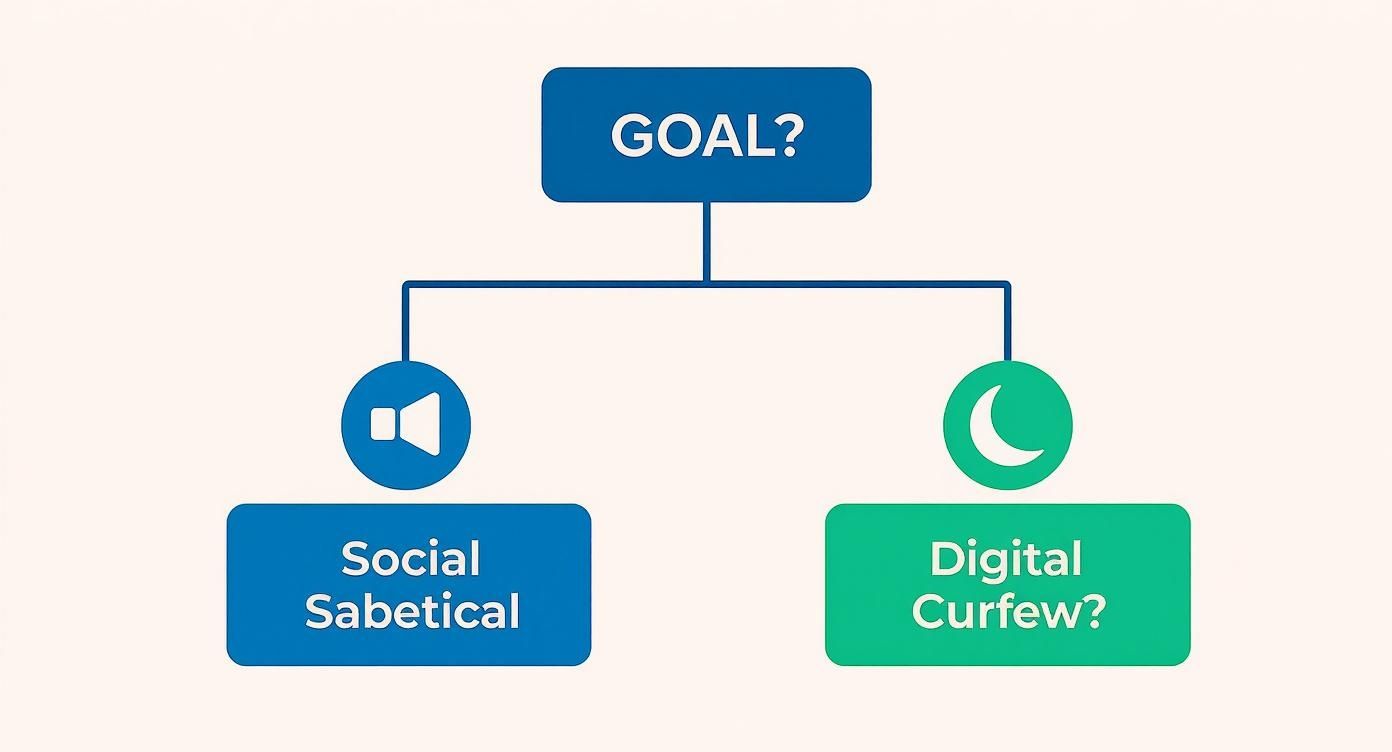
As you can see, defining your core goal—whether it’s cutting down on social media stress or just getting better sleep—points you toward the most effective type of detox for your specific needs. By planning ahead and anticipating these first few bumps in the road, you set yourself up not just to survive your detox, but to actually thrive in it.
How to Maintain a Healthy Tech Balance After Your Detox
Finishing a digital detox feels like a huge accomplishment. And it is. But the real challenge starts the moment you power your devices back on. The whole point wasn’t just to take a temporary break, but to forge a new, more intentional relationship with technology for the long haul.
Now comes the hard part: weaving the clarity you just found back into the fabric of your daily life. It’s about building a new framework for how you live with your devices, one where you’re calling the shots. Think of it less like a crash diet you’re bound to abandon and more like mindful eating—you’re consciously choosing what digital content you consume, when you consume it, and why.
Actionable Insights for Building New Digital Boundaries
To make the benefits from your detox stick, you need to set up new house rules that actually work. A great place to start is with physical boundaries. Designating ‘tech-free zones’ in your home, like the bedroom or the dinner table, is a surprisingly powerful first step. This one simple change can do wonders for your sleep and bring real conversation back to mealtimes.
Here are more actionable insights for taking control:
- Schedule ‘Screen Time’ Blocks: Instead of reacting to every alert, set aside specific, limited times to check your email or social media. Put it in your calendar like any other appointment.
- Execute a Notification Purge: Go through your apps and turn off all non-essential notifications. The insight here is that most alerts are designed for the app’s benefit, not yours. Reclaim your focus by being ruthless.
- Curate Your Digital Diet: Unfollow accounts that make you feel drained, anxious, or inadequate. Your feed should be a source of inspiration, education, or joy—not a trigger for comparison.
The purpose of a detox is to reset your default settings. Your new default should be ‘offline,’ with intentional moments of ‘online’ activity, not the other way around.
From Short-Term Break to Long-Term Balance
Keeping this new balance is also about being a more conscious consumer of technology itself. For many, this extends to thinking about the lifecycle of their gadgets. A truly healthy relationship with tech can even include responsible ownership, like learning how to reduce electronic waste and making more sustainable choices with your hardware.
Ultimately, the goal is to use technology as the tool it’s meant to be, not to let it use you. The insights you gained from your detox are the blueprint. For more ideas on how to keep the momentum going, check out these practical ways to reduce screen time. Your detox was the reset button; these habits are how you stay in control for good.
Got Questions? Let’s Talk Through Them
Even with a solid plan, it’s natural to have a few nagging questions before you unplug. Let’s tackle some of the most common ones I hear—getting these sorted out beforehand can make all the difference between a frustrating attempt and a successful reset.
How Long Should a Detox Actually Last?
Honestly, there’s no magic number here. The right length is whatever helps you hit your goals.
A quick weekend detox, say 24-48 hours, can work wonders as a mental reset button. It’s just enough time to break the cycle and catch your breath. But if you’re aiming for deeper, more lasting changes in your habits and how you see your tech, a full week often delivers more profound results.
Don’t underestimate the small stuff, though. Even just committing to a 90-minute screen-free window before bed can radically improve your sleep. The key is to pick a timeframe that feels like a genuine challenge, but not an impossible one. Start there.
What if My Job Demands I’m Always Online?
This is a big one, and for many, a total disconnect just isn’t in the cards. That’s perfectly okay. If a full-blown detox is unrealistic, think of it as a “digital diet” instead. The goal is the same: reclaiming control, even when your job keeps you tethered.
You can still set powerful boundaries. Try a hard stop on work emails after 6 PM. Or maybe you turn off all notifications from work apps on your personal phone—if it’s a real emergency, they’ll call. Scheduling “deep work” blocks where you shut down everything except the one tool you absolutely need is another great strategy.
It’s very common to feel restless, anxious, or even just plain bored when you first start. This isn’t a sign of failure—it’s a sign of how much your brain has come to rely on that constant digital buzz. Just acknowledge the feeling, don’t fight it, and gently remind yourself why you started this.
The best way to get through this initial weirdness is to have some engaging offline activities ready to go. Go for a walk, pick up a book, call a friend. These feelings almost always fade as your mind adjusts and rediscovers how good a little quiet can feel.
Ready to build a healthier relationship with your technology? The Digital Detox App offers simple, free tools to help you unplug, recharge, and find lasting balance. Start your journey to digital well-being today.